Phenotyping left ventricle failure with hemodynamic biomarkers from 4D Flow magnetic resonance imaging
Funder: Piano nazionale per gli investimenti complementari al PNRR (PNC), Fondazione ANTHEM (Advanced Technologies for Human-centred Medicine)
Duration of funding: 2025 – 2026
Grant ID: n/a
Lead institution: IRCCS Policlinico San Donato
Partners: n/a
Project description
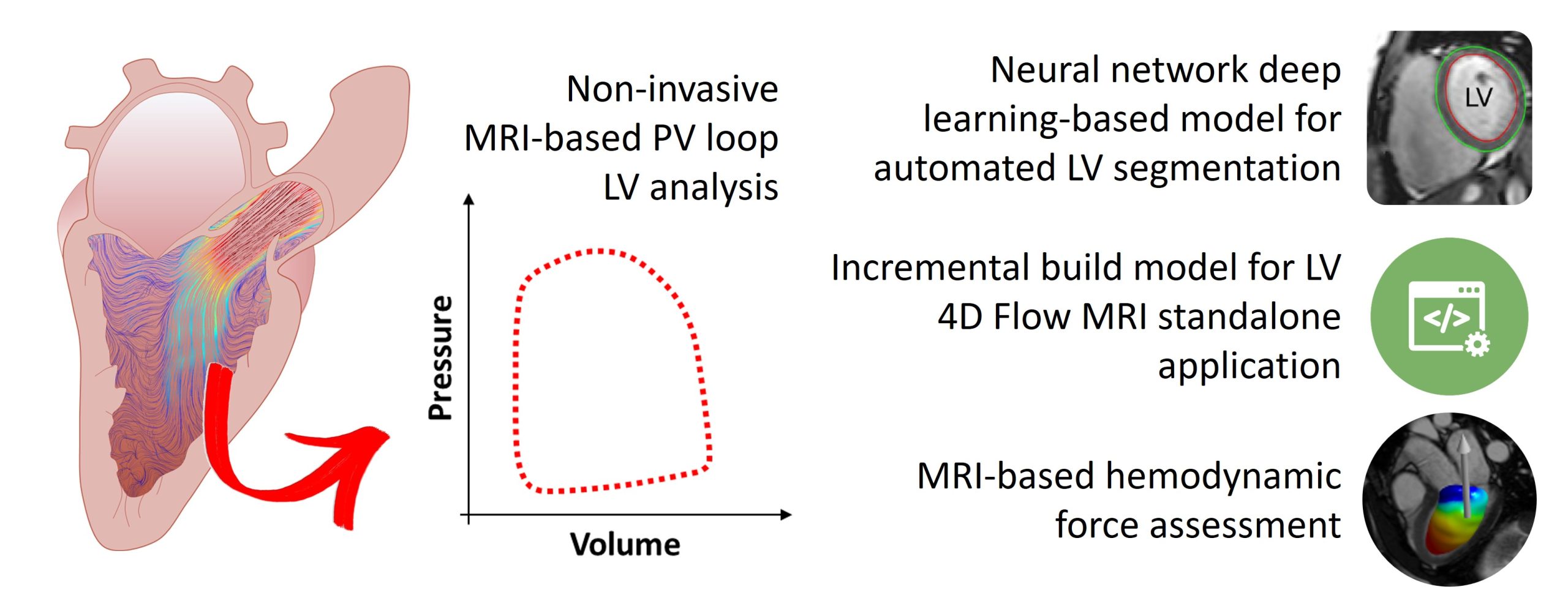
To date, the capability of 4D Flow MRI in unraveling intracavitary dysfunction remains controversial and several 4D Flow biomarkers are not easily and systematically available in clinical practice. TRANSLATE is aimed to increase 4D Flow MRI clinical usability by facilitating the access to a wealth of information and biomarkers, which may enhance risk stratification in heart failure, and by supporting the development of a standalone application for automated 4D Flow analysis of the left ventricle. To develop this framework and demonstrate its potential, TRANSLATE will target a specific clinical use case, namely LV dysfunction in patients referred to transcatheter aortic valve replacement (TAVR) due to severe aortic stenosis (AS).
Leveraging 4D Flow MRI technology, TRANSLATE will address the specific theme of “Image-based modelling of disease” to elaborate in vivo hemodynamic biomarkers of intracavitary dysfunction and evaluate their capability to complement and improve diagnosis and risk stratification. Pursuing the purpose of the AdvaNced Technologies for Human-centrEd Medicine (ANTHEM) initiative to bridge gaps in healthcare, TRANSLATE will establish a multidisciplinary and innovative framework (Figure 1) to facilitate and increase the adoption of 4D Flow MRI intracavitary analysis in clinical practice.